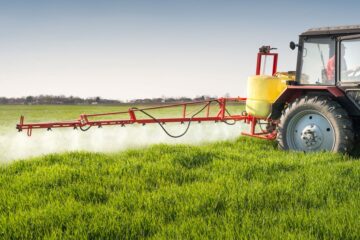
New-generation herbicides—low-dose, highly active, and often systemic molecules—demand precision in spray application. In Indian cropping systems such as rice, soybean, cotton, and maize, performance variability is frequently linked not to chemistry, but to application quality. Whether using boom sprayers or drones, optimizing droplet size spectrum, nozzle compatibility, drift mitigation, and label compliance is critical for maximizing efficacy and minimizing resistance risks.
Modern AgriJet nozzle selection plays a decisive role in achieving the correct droplet category. Systemic herbicides typically perform best in Medium to Coarse droplets, ensuring adequate coverage while reducing drift. Contact herbicides may require finer droplets for better leaf surface coverage—but only under controlled wind conditions.
Key Optimization Strategies for Boom and Drone Sprayers
1. Droplet Size Spectrum Management
- Match droplet category (Fine, Medium, Coarse) to herbicide mode of action
- Maintain recommended pressure range to avoid droplet shift
- Avoid ultra-fine droplets under Indian wind conditions
Using DropCheck spray analysis, applicators can validate droplet density (drops/cm²), VMD, and coverage percentage in-field. This enables data-backed calibration rather than assumption-based spraying.
2. Nozzle Compatibility & AgriJet Selection
- Use air-induction nozzles for drift-prone environments
- Select correct spray angle (80°/110°) for boom height and spacing
- Ensure drone-compatible low-drift hollow cone or flat fan configurations
- Replace worn nozzles to maintain flow accuracy
Proper AgriJet nozzle selection ensures optimized spray droplet spectrum and uniform distribution across boom width or drone swath.
3. Drift Mitigation in Indian Conditions
- Maintain boom height at 40–50 cm above canopy
- Avoid spraying above 12–15 km/h wind speed
- Schedule early morning or late evening applications
- Use drift reduction nozzles in peri-urban and horticulture zones
Drift control protects neighboring crops, prevents residue issues, and supports stewardship commitments.
4. Label Compliance & Regulatory Stewardship
- Follow recommended water volume per hectare
- Adhere to specified droplet category
- Ensure buffer zone compliance
- Maintain application records
With increasing scrutiny on residue management and environmental impact, spray performance validation through DropCheck analysis strengthens compliance documentation.
Conclusion
Optimizing spray application for new-generation herbicides is not optional—it is foundational to achieving consistent weed control, delaying resistance, and protecting brand reputation. Integrating calibrated boom or drone sprayers, precision-engineered AgriJet nozzles, and DropCheck spray analysis transforms herbicide application from routine operation into measurable agronomic performance.