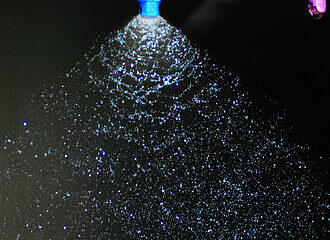
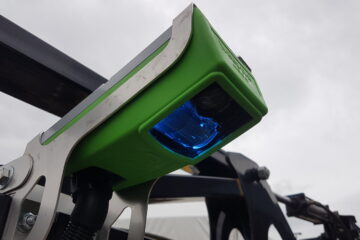
Effective spray drift management during boom sprayer operations is critical for ensuring on-target deposition, regulatory compliance, environmental protection, and optimized pesticide efficacy. Spray drift not only reduces field performance but also increases the risk of off-target contamination, residue violations, and crop damage. A structured, technology-driven approach significantly improves spray quality and accountability.
What is Spray Drift in Boom Spraying?
Spray drift refers to the movement of pesticide droplets away from the intended target during or after application. Drift potential increases with smaller droplet sizes, high wind speeds, low humidity, high boom height, and improper nozzle selection.
Key Strategies for Spray Drift Management
1. Correct Nozzle Selection – Use AgriJet Drift-Reduction Nozzles
Nozzle selection is the most influential factor in droplet spectrum control. AgriJet air-induction and low-drift nozzles produce coarse to ultra-coarse droplets that reduce drift without compromising coverage.
Best practices:
- Select coarse droplets for systemic herbicides.
- Use air-induction nozzles for high-risk drift situations.
- Match flow rate with boom speed and application volume.
- Replace worn nozzles to maintain droplet uniformity.
2. Optimize Operating Parameters
- Maintain boom height at 40–50 cm above canopy.
- Avoid spraying when wind speed exceeds 10–15 km/h.
- Spray during early morning or late evening for stable atmospheric conditions.
- Maintain consistent pressure to prevent droplet size shift.
3. Validate Droplet Spectrum Using Droplet Scan & Water-Sensitive Paper
Field-level droplet assessment ensures real-time spray quality control.
Using Droplet Scan water-sensitive paper:
- Place papers across boom width.
- Scan using droplet analysis tools.
- Measure droplet density (drops/cm²), coverage %, and VMD.
- Confirm droplet category (Fine, Medium, Coarse).
This data-driven approach enables evidence-based spray adjustments, reducing drift risk while improving deposition efficiency.