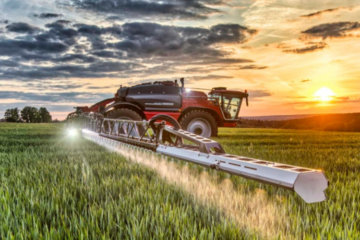
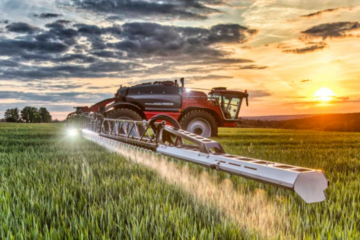
In modern crop protection programs, adjuvants play a decisive role in improving spray deposition, spreading, retention, and active ingredient uptake. With increasing adoption of low-dose, high-efficacy formulations such as EC (Emulsifiable Concentrate), SC (Suspension Concentrate), and OD (Oil Dispersion), optimizing adjuvant use has become essential for both boom and drone sprayer applications in Indian cropping systems.
Adjuvants modify the physical and chemical behavior of spray droplets—directly influencing droplet size spectrum, canopy penetration, evaporation rate, and herbicide or fungicide performance.
Key Types of Adjuvants and Their Functional Roles
1. Surfactants (Non-ionic & Organosilicone)
- Reduce surface tension for improved leaf spreading
- Enhance coverage in contact herbicides and fungicides
- Improve absorption in systemic molecules
- Critical for waxy leaf crops like cotton and soybean
Surfactants are particularly effective when paired with optimized AgriJet nozzle selection, ensuring adequate droplet spread without excessive drift.
2. Oil-Based Adjuvants (COC/MSO)
- Improve penetration of herbicides in tough weeds
- Enhance performance under dry conditions
- Reduce wash-off risk
These are commonly recommended with EC and OD formulations, where compatibility testing is essential before tank mixing.
3. Humectants
- Slow droplet evaporation
- Improve uptake during low humidity conditions
- Support drone spraying where droplet travel time is longer
Humectants are especially relevant in Indian semi-arid zones where rapid evaporation reduces efficacy.
Droplet Size Spectrum & Nozzle Compatibility
Adjuvants influence droplet behavior and must be aligned with the correct droplet category:
- Medium to Coarse droplets for systemic herbicides
- Fine to Medium droplets for contact fungicides (under controlled wind)
- Use air-induction nozzles for drift mitigation in boom sprayers
- Select drone-compatible flat fan or hollow cone nozzles
Proper AgriJet nozzle selection ensures an optimized spray droplet spectrum when adjuvants alter spray solution properties.
Spray Performance Validation with DropCheck Spray Analysis
Field-level DropCheck spray analysis allows validation of:
- Droplet density (drops/cm²)
- Coverage percentage
- Uniformity across boom width or drone swath
This ensures that adjuvant inclusion improves deposition rather than increasing drift risk.
Drift Mitigation & Label Compliance
- Follow label-recommended adjuvant type and concentration
- Avoid excessive surfactant rates that create ultra-fine droplets
- Maintain correct pressure and boom height
- Adhere to buffer zone and environmental regulations
Adjuvants enhance bioefficacy only when integrated with calibrated equipment and validated spray quality.
Conclusion
The role of adjuvants extends beyond tank additives—they are strategic tools for maximizing deposition, improving bioefficacy, and ensuring regulatory compliance. When combined with precision nozzle selection and DropCheck spray analysis, boom and drone spraying in India can achieve measurable improvements in crop protection performance.